
After a Florida storm, stay off the roof and photograph everything before you move anything. Clear only the debris you can reach from the ground. A branch that has broken tiles or punctured shingles, a tree on the roof, or anything near a power line is a job for a professional, not a ladder.
Most storm debris is cosmetic and comes off with no lasting harm. The goal is to tell the two apart without putting yourself at risk, and to keep a clear record if you end up talking to your insurance company.
Key Takeaways
- Stay off a wet or storm-damaged roof; clear only what you can reach from the ground.
- Photograph every side of the house, close-ups and any inside damage before you move anything.
- Keep damaged shingle or tile pieces and receipts for anything you buy to protect the home.
- Debris lying flat on an intact roof is usually cosmetic; a branch stuck into the roof, broken tile or torn shingles is not.
- Have a professional handle tarps, trees on the roof and anything near power lines.

What’s in This Guide
- What Should You Do First When There’s Debris on Your Roof?
- What Roof Debris Can You Remove Yourself?
- Why Is It Dangerous to Walk on a Wet or Damaged Roof?
- How Do You Document Roof Damage Before Cleanup?
- Is It Cosmetic Debris or a Puncture?
- What Changes on a Tile or Shingle Roof?
- What Should You Do About a Tarp?
- When Should You Call a Roofer?
- Roof Debris After a Storm: Common Questions
- How Green Vista Roofing Helps
- The Short Version
What Should You Do First When There’s Debris on Your Roof?
Start with safety, then photos, then cleanup from the ground. Doing it in that order protects you and keeps the evidence of any damage intact.
- Check for hazards before you go outside. Stay well away from downed or sagging power lines and anything touching them, and report them to your utility.
- Photograph before you touch anything. Take wide shots of every side of the house and close-ups of the debris from the ground.
- Look from the ground and from inside. Scan the roof with binoculars or your phone’s zoom, then check ceilings and, if you can do it safely, the attic for drips or stains.
- Clear only what is on the ground. Yard branches, leaves and pieces of shingle or tile that have already fallen are fine to gather once photographed.
- Leave the roof itself to a professional. Anything still on the roof, or any sign that something broke through, needs a roofer’s inspection.

What Roof Debris Can You Remove Yourself?
If you can reach it while standing on the ground, you can usually clear it after taking photos. If reaching it means climbing onto the roof or leaning a ladder against damaged gutters, leave it. This table covers the debris Florida homeowners see most after a storm.
| Debris | Safe for you to clear? | Who handles it |
|---|---|---|
| Leaves, twigs and palm fronds in the yard | Yes, after photos | You |
| Fallen shingle or tile pieces on the ground | Yes, but keep a few pieces | You, then show them at the inspection |
| Light debris resting on the roof | Only if it comes off from the ground | You, or leave it for the inspection |
| Branch lying across the roof | No | A roofer, after photos |
| Branch or limb stuck into the roof | No, do not pull it out | A roofer; a tree service for large limbs |
| Tree on the house | No | A tree service to remove it, then a roofer |
| Anything near power lines | Never | Your utility first |
Leave a branch that has pierced the roof where it is. Pulling it out can open a larger hole, and the branch itself is part of what an inspection needs to see.
Why Is It Dangerous to Walk on a Wet or Damaged Roof?
A roof after a storm is a poor place to stand. Wet shingles and tile are slick, and damage you cannot see from above can give way under your weight.
- Hidden decking damage. An impact can crack or soften the decking under intact-looking shingles or tile.
- Loose and broken tile. Cracked tiles can slide underfoot, and walking on tile breaks more of it.
- Lifted shingles. Wind can loosen shingles so they shift when stepped on.
- Shifting debris. Branches and limbs can roll or slide once weight is put on them.
- Overhead lines. Storms can leave service drops and power lines lower or closer to the roof than usual.
How Do You Document Roof Damage Before Cleanup?
Take photos of everything before you clear anything, and keep what you remove. Photos taken before cleanup show what the storm did. Photos taken after only show a tidy yard.
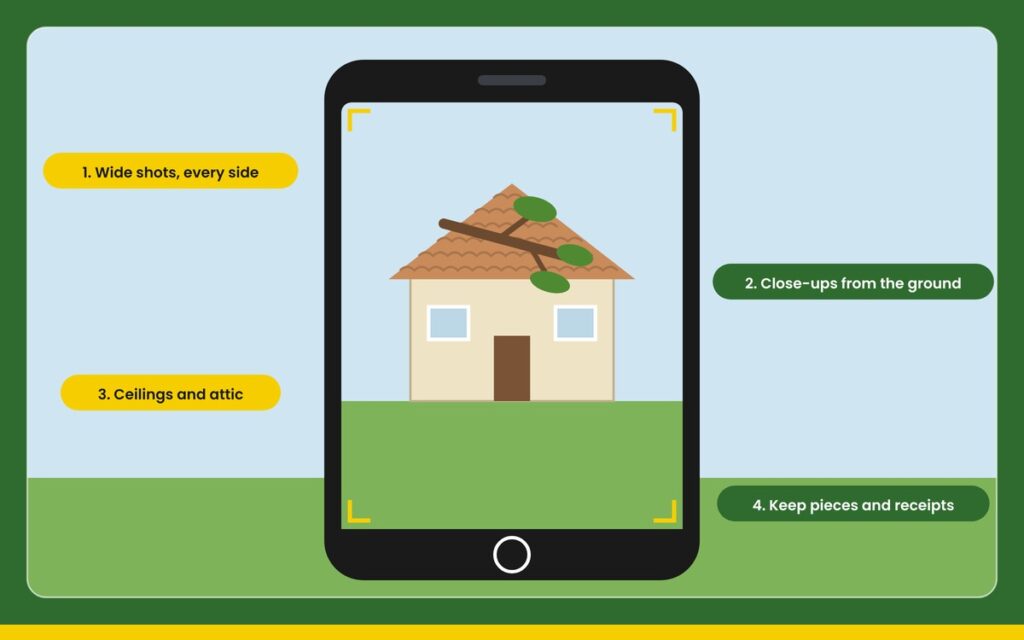
- Wide shots first. Photograph each side of the house so the debris and the roof show together.
- Then close-ups. Zoom in from the ground on branches, missing shingles, broken tile and dented gutters.
- Inside, too. Photograph ceiling stains, drips and anything wet in the attic.
- Keep the dates. Leave your phone’s date and location settings on, and don’t edit the originals.
- Hold on to pieces and receipts. Set aside damaged shingle or tile pieces, and keep receipts for anything you buy to protect the home.
Florida’s Department of Financial Services advises homeowners to take pictures of damage, keep receipts and hold on to damaged property until the insurance company has inspected. Your agent or carrier can tell you what your own policy requires.
Is It Cosmetic Debris or a Puncture?
Cosmetic debris sits on top of the roof and leaves the surface intact. A puncture breaks through the roof covering, and sometimes the decking below, which lets water in. From the ground, the difference usually shows in what is under and around the debris.

Usually cosmetic
Leaves, pine needles, small twigs and palm fronds lying flat on the roof, with shingles or tiles still flat and whole around them. Debris in gutters belongs here too, as long as the gutter is still attached and draining.
Signs of real damage
A branch end stuck into the roof, cracked or missing tiles, missing or torn shingles, exposed underlayment, or a dip in the roofline. Inside, watch for new ceiling stains, drips or daylight through the attic decking. Any one of these is worth an inspection, even if nothing is leaking yet.
What Changes on a Tile or Shingle Roof?
Tile and shingle roofs fail in different ways after a storm, so the clues you look for from the ground differ too.
Tile roofs
Concrete and clay tile can crack or break where debris hits, and broken pieces often slide into gutters or onto the ground. On a tile roof, the underlayment beneath the tiles is the main waterproofing layer, so a cracked tile may not leak right away, but it leaves that layer exposed to sun and rain.
Tile also breaks easily under foot traffic. That is one more reason to leave tile roof cleanup to a roofer who knows where to step.
Shingle roofs
Shingles tend to show debris damage as tears, creases, missing tabs or bare spots where granules were knocked off. A creased shingle may look fine from a distance but no longer seals properly.
Granules piling up in gutters or at downspouts are a clue worth photographing. Our guide to spotting shingle granule loss after a storm shows what to look for.
What Should You Do About a Tarp?
A tarp is temporary protection for a roof that is letting water in, and it should be installed by a professional rather than from a ladder. A poorly secured tarp can tear loose in the next band of wind and rain.
- Photograph first. Get photos of the damaged area before it is covered.
- If a tarp is already on, check it from the ground after each round of weather and don’t walk on it. A wet tarp is extremely slick.
- Keep the receipts. Hold on to receipts for tarping and any materials you buy.
- Plan the permanent repair. A tarp buys time; it does not fix the roof underneath.
When Should You Call a Roofer?
Call for an inspection when debris is still on the roof, when anything has broken through, or when you see signs of water inside. You do not need to wait until a leak appears; damage under debris is easier to judge before more weather moves through.
- A branch or limb is lying on or stuck into the roof.
- Tiles are cracked or missing, or shingles are torn, creased or gone.
- You see exposed underlayment, a dip in the roofline or a damaged gutter.
- There are new stains, drips or damp insulation inside.
- A tarp is needed or an existing one has shifted.
Green Vista Roofing provides storm damage repair for Florida homes, starting with an inspection of the roof and what the debris left behind.
Roof Debris After a Storm: Common Questions
Should I clear roof debris before the insurance adjuster comes?
Photograph everything first. Florida’s Department of Financial Services says insurance contracts require temporary repairs to prevent further damage, and advises keeping receipts and not disposing of damaged property until the insurer inspects. So clear ground-level debris, protect the home, and keep the pieces. Your agent or carrier can confirm what your policy requires.
Can I use a leaf blower or hose to clear my roof?
Not from the roof. Standing on a wet or damaged roof is the main risk, whatever tool you hold. Spraying from the ground can also push water under lifted shingles or broken tile. If light debris doesn’t come off with a long-handled tool from the ground, leave it for the inspection.
Is it safe to go on the roof once it dries?
Drying removes one hazard, not the others. Cracked decking, loose tile and wind-lifted shingles can still give way, and tile breaks under foot traffic. A roofer can check the roof and point out anything that needs attention, which also gives you a documented look at its condition.
Does a branch on the roof always mean damage?
No. Many branches land and rest on the surface without breaking anything. Look from the ground for cracked or missing tiles, torn shingles or a branch end stuck into the roof, and check inside for stains or drips. If you can’t tell, an inspection will settle it.
Who removes a tree that fell on my roof?
A tree service removes the tree, and a roofer inspects and repairs the roof afterward. Take photos before anything is cut or moved. Large limbs resting on a roof can shift during removal, so the work is best left to crews with the right equipment.
How Green Vista Roofing Helps
Green Vista Roofing is a licensed Florida roofing contractor serving homeowners across the Gulf Coast, East Coast and Central Florida. We offer a free roof inspection with no obligation, and we photograph each slope we check and explain the findings in plain language.
If you decide to file a claim, you start it with your insurance agent. We help you understand the inspection findings and documentation, can be there when the adjuster inspects, and walk through the repair or replacement recommendation with you. Our insurance claims process page explains each step.
Green Vista Roofing does not guarantee claim approval, does not determine coverage, and does not waive required deductibles. Insurance decisions are made by the insurance carrier.
To schedule an inspection, call 941-303-3158 or request a free quote online.
The Short Version
Stay off the roof, photograph everything, and clear only what you can reach from the ground. Keep damaged pieces and receipts.
Debris lying flat on an intact roof is usually cosmetic. A branch stuck into the roof, broken tile, torn shingles or water inside means it’s time for an inspection.