The roofing choices that cut a Florida cooling bill are the ones that keep the sun’s heat out of your attic: a light, reflective roof surface, a material that sheds the heat it does absorb, and an attic that vents and blocks heat before it reaches your ceilings.
Color and the attic usually matter more than the material name on the quote. Below is how each option works on a Florida home, where it fits, and what drives the cost of getting it.
Key Takeaways
- A light, reflective roof surface keeps the most heat out of a Florida attic.
- Color matters more than material: light metal, light tile and cool roof shingles all run cooler than dark versions of themselves.
- Attic ventilation and a radiant barrier help under any roof, especially with ductwork in the attic.
- Flat and low-slope roofs benefit from white TPO or, if the roof is sound, a reflective coating.
- The most cost-effective time to upgrade is during a roof replacement you already need.

What’s in This Guide
- What Does Florida’s Heat Actually Do to a Roof?
- Which Roofing Options Lower a Florida Cooling Bill?
- How Do Attic Ventilation and Radiant Barriers Help?
- What Drives the Cost of an Energy-Efficient Roof in Florida?
- How Should You Choose an Energy-Saving Roof?
- Energy-Efficient Roofing: Common Questions
- How Green Vista Roofing Helps
- The Short Version
What Does Florida’s Heat Actually Do to a Roof?
A Florida roof absorbs strong sun for most of the year, and a dark surface turns much of that sunlight into heat. That heat moves down through the roof deck, warms the attic air, and then radiates onto your ceiling insulation and any ductwork running through the attic.
The attic is where your bill is decided. Many Florida homes run their air conditioning ducts and air handler through the attic, so a hot attic means cooled air loses some of its chill before it ever reaches a room.
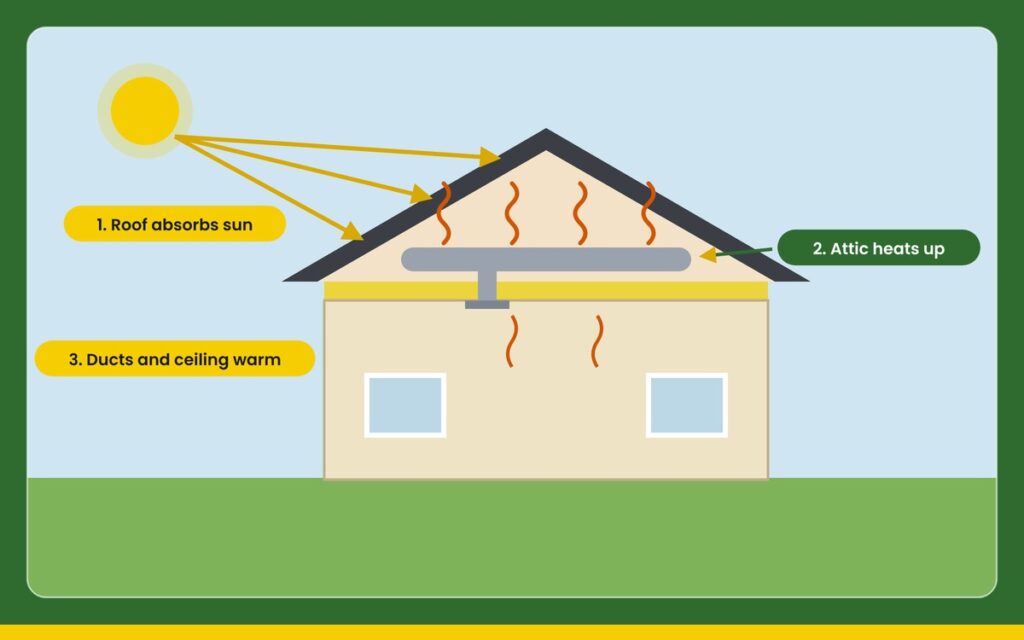
Florida adds two things most of the country doesn’t get to the same degree. The cooling season runs for much of the year, and warm, humid nights give the attic little chance to shed heat before the next morning’s sun starts the cycle again.
Heat and UV also wear on the roof itself. Shingles that run hot day after day dry out and lose granules faster, which is one reason a cooler roof surface is about roof life as well as comfort.
Which Roofing Options Lower a Florida Cooling Bill?
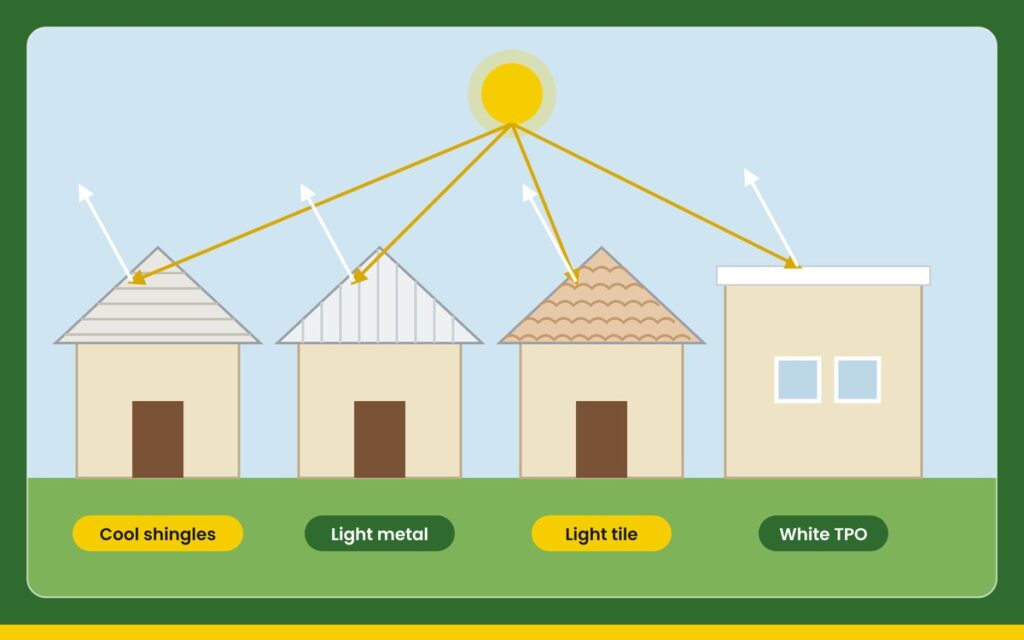
Every energy-saving roof works in one of two ways: it reflects sunlight before it becomes heat, or it releases absorbed heat quickly instead of passing it into the house. The best option for you depends mostly on your roof’s slope and whether you are replacing the roof or improving the one you have.
| Option | How it keeps heat out | Best fit | What to weigh |
|---|---|---|---|
| Cool roof shingles | Reflective granules bounce more sunlight off the surface | Pitched roofs due for replacement | Lighter colors reflect most; check HOA color rules |
| Light-colored metal | Reflective painted finish, and metal sheds heat fast once the sun drops | Pitched roofs, replacement | The finish color does the work, not bare metal |
| Concrete or clay tile | Heavy tile delays heat, and air moving under profiled tile carries some away | Pitched roofs, replacement | Light colors help; heavy tile releases stored heat into the evening |
| White TPO membrane | Bright white single-ply surface reflects sunlight | Flat and low-slope roofs | Stays most effective when kept clean |
| Reflective roof coating | Adds a reflective layer over an existing roof | Sound low-slope roofs not ready for replacement | Only as good as the roof underneath |
| Attic ventilation | Moves hot, humid air out of the attic | Any home, any roof | Intake and exhaust have to be balanced |
| Radiant barrier | Reflective foil cuts heat radiating from the roof deck into the attic | Attics with ducts or thin insulation | Needs an air space and stays effective only while clean |
Cool roof shingles
Cool roof shingles look like standard architectural shingles, but their granules are made to reflect more sunlight. On a pitched roof that is due for replacement, they are the simplest way to get a cooler surface without changing the look of the house.
Green Vista Roofing installs Pinnacle Impact Shingles and offers cool roof options for Florida homes. Color still matters within a cool line, so compare rated colors, not brochure photos. The Cool Roof Rating Council keeps a public directory of rated roof products you can check by product and color.
Light-colored metal roofing
A metal roof with a light, reflective finish reflects a large share of the sun, and thin metal holds very little heat, so it cools quickly once the sun moves off it and helps the attic cool down in the evening.
The finish is doing the work. Bare or unpainted metal reflects light but releases absorbed heat poorly, so a painted, light-colored finish is what makes metal an energy-efficient choice on a Florida home.
Concrete and clay tile
Tile behaves differently from shingles and metal. Its weight lets it soak up heat slowly, which delays how fast the attic warms during the day. Profiled tiles such as S-tile also leave an air space underneath, and air moving through that space carries some of the heat away before it reaches the deck.
The trade-off is that stored heat releases into the evening. A lighter tile color reduces how much heat the tile takes on in the first place, whether you choose S-tile, flat or slate, or shake-style profiles.
White TPO for flat and low-slope roofs
Flat and low-slope roofs face the sun almost all day, so a reflective surface matters even more there. Green Vista Roofing installs Versico VersiWeld TPO, a white single-ply membrane, and Polyglass systems on low-slope roofs.
A reflective membrane loses some of its brightness as dirt and mildew build up in Florida humidity, so periodic cleaning helps it keep reflecting.
Reflective roof coatings
A reflective coating adds a bright surface over an existing roof, most often on low-slope roofs. It can make sense when the roof is still sound but runs hot. A coating does not fix leaks, soft decking or failing seams, so the roof underneath has to pass an inspection first.
How Do Attic Ventilation and Radiant Barriers Help?
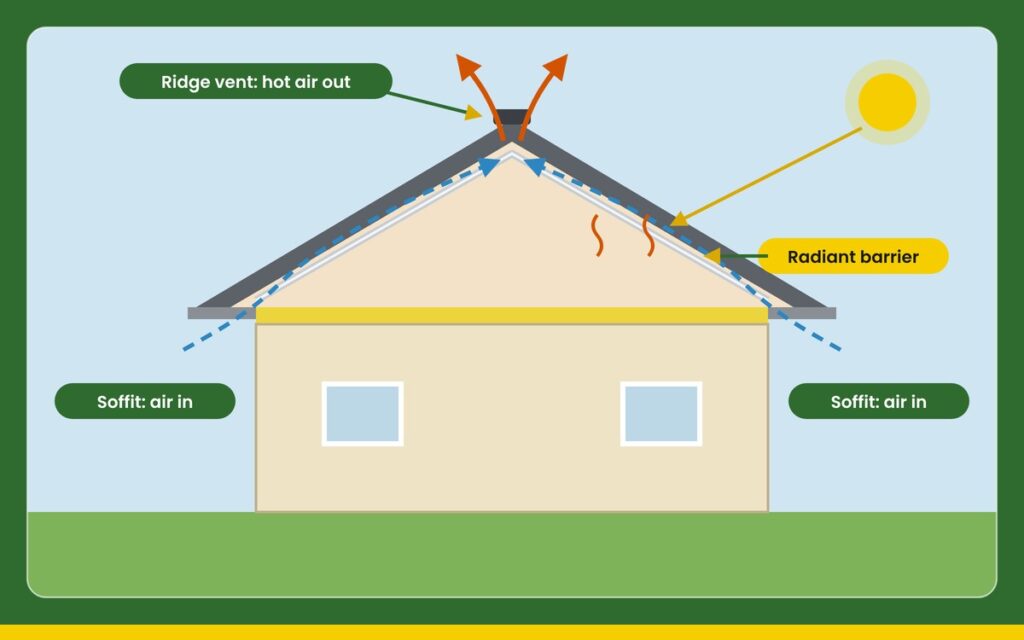
The roof surface decides how much heat gets in; the attic decides how much of it reaches you. Ventilation removes hot air that has already built up, and a radiant barrier cuts the heat radiating down from the roof deck. Together they work with any roofing material.
Attic ventilation
A ventilated attic pulls cooler air in low, usually through soffit vents, and lets hot air out high, usually at a ridge vent. The balance between intake and exhaust matters more than the number of vents. Blocked soffits or mixed exhaust types can leave hot, humid air trapped against the deck.
Good airflow also helps the roof itself by reducing heat and moisture under the decking. If you want to check your own attic, our guide to improving attic ventilation in a Florida home walks through what to look for.
Radiant barriers
A radiant barrier is a reflective foil layer installed under the roof deck or across the rafters, facing an open air space. It works on radiant heat, the kind a hot deck beams down onto insulation and ductwork, rather than on heat moving through contact.
Radiant barriers tend to do the most good in hot, sunny climates and in attics that hold ductwork. They need that air space to work, and dust settling on the foil reduces how well it reflects, so placement matters.
What Drives the Cost of an Energy-Efficient Roof in Florida?
The biggest cost factor is timing: an energy-saving roof costs least when it is part of a replacement you already need. After that, roof size, material, the condition of the deck and any attic work set the price.
- Replacing or upgrading. Choosing a cool shingle, light metal or light tile during a roof replacement avoids paying for a second project later.
- Roof size and pitch. More square footage and steeper slopes take more material and labor.
- Material choice. Shingle, metal, tile and membrane systems differ in material and installation cost, and colors within a line can vary.
- Deck condition. Soft or damaged decking found during tear-off has to be replaced before the new roof goes on.
- Attic corrections. Adding or rebalancing vents, or installing a radiant barrier, adds scope beyond the roof covering.
- Permits and code. Florida re-roofs need a permit and must meet the Florida Building Code, which can add required items to the job.
Financing options are available for qualifying roofing and exterior projects, including through Renew Financial. If your replacement also includes wind mitigation upgrades, you may qualify for My Safe Florida Home, subject to current state funding.
How Should You Choose an Energy-Saving Roof?
Work from the attic up, then match the surface to your roof’s slope and remaining life. This order keeps you from paying for a new roof when the real problem is airflow, or for a coating when the roof needs replacing.
- Look at the attic first. Check for blocked soffit vents, missing exhaust and ducts running through a hot space.
- Know how much life the roof has left. A roof near the end of its life is the moment to choose a cooler material. A sound roof may only need attic work or a coating.
- Match the surface to the slope. Shingle, metal and tile suit pitched roofs; TPO and reflective coatings suit flat and low-slope roofs.
- Choose the lightest color you will be happy with. Confirm it with your HOA before you commit, since many communities control roof colors.
- Ask for rated products. Request the Cool Roof Rating Council listing for the exact product and color being quoted.
ENERGY STAR notes that cool roofs work best in hot, sunny climates and on buildings with less roof insulation, which describes a lot of Florida homes.
Energy-Efficient Roofing: Common Questions
Does a light-colored roof really make a difference in Florida?
Yes. A light, reflective surface turns less sunlight into heat, so less heat moves through the deck into the attic. The difference is largest on homes with ducts in the attic or modest attic insulation. How much it changes your bill depends on your insulation, the roof being replaced and how much shade the roof gets.
Is metal or tile more energy efficient in Florida?
Both can perform well, and color matters more than the material. Light-colored metal reflects sunlight and cools quickly after sunset. Tile absorbs heat slowly and lets air move beneath profiled tiles, but it releases stored heat into the evening. Choose based on your roof structure, budget and look, then pick the lightest finish that works.
Do I need a new roof to make my home more energy efficient?
Not always. Balancing attic ventilation or adding a radiant barrier can help under any roof. A sound low-slope roof may take a reflective coating. If your roof is near the end of its life, though, choosing a cooler material during replacement is usually the most cost-effective upgrade.
Is a radiant barrier worth it in a Florida attic?
It often makes sense in a hot, sunny climate, especially when ductwork runs through the attic. A radiant barrier reflects heat beaming down from the roof deck. It needs an air space in front of the foil and works best kept free of dust, so it is worth having the attic checked before deciding.
Will a light roof show algae streaks in Florida humidity?
It can, because dark algae streaks stand out more on a light surface. Many shingles are made with algae-resistant granules, and gentle cleaning keeps a reflective roof bright. Keeping the surface clean also matters for performance, since dirt and growth reduce how much sunlight the roof reflects.
How Green Vista Roofing Helps
Green Vista Roofing is a licensed Florida roofing contractor working on homes across the Gulf Coast, East Coast and Central Florida. We help you understand what your roof and attic need before anyone talks about materials.
A free roof inspection comes with no obligation. We photograph what we check, walk you through the findings in plain language, and recommend repair, replacement, maintenance or nothing yet.
If a cooler roof makes sense, we explain the shingle, metal, tile or low-slope options that fit your home and what drives the cost. Call 941-303-3158 or ask for a free quote online.
The Short Version
In Florida, the roof that saves energy is the one that keeps heat out of the attic. A light, reflective surface does most of that work, and ventilation and a radiant barrier handle what gets through.
Pick the surface that suits your roof’s slope, choose the lightest color you like, and time the upgrade with a replacement when you can.